Skip to content
LingoSprout

German for little ones

Learn German for kids, with the article attached.

LingoSprout teaches young children their first German words through big pictures and tap-to-hear audio. On 231 of its 266 cards the noun arrives with its article — die Katze, not Katze — so gender is learned as part of the word instead of as a correction later. Ages 2 and up, offline, no ads.

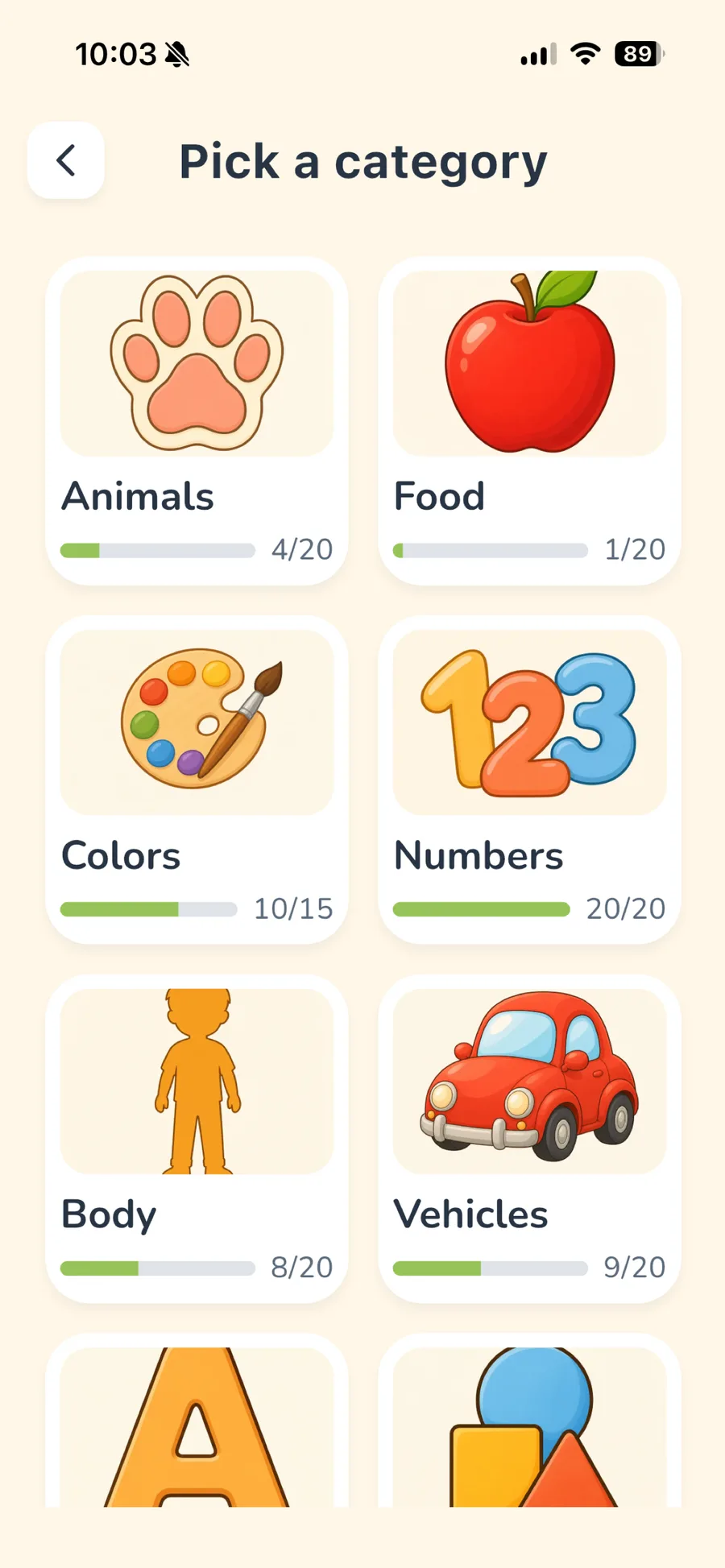
LingoSprout Learn screen showing word categories with progress bars
Categories a pre-reader can navigate by picture

Gender is the hard part, so it comes with the word

Every German learner meets the same obstacle, and it arrives early: a noun is not just a noun, it is der, die or das, and the article is not guessable from the thing itself. Learners who meet nouns bare and attach the article afterwards spend years correcting themselves.

LingoSprout sidesteps that by never showing most nouns bare. 231 of the 266 picture cards carry the noun together with its article, so a child's first encounter with the word is already "die Katze". It costs the child nothing — they are learning a sound attached to a picture either way.

The cards that do not carry an article are the ones where it would be wrong to: colours, numbers, parts of a set, and words that are not nouns at all.

What the German content actually contains

Picture cards with German audio
266, across 15 everyday categories
Nouns taught with der / die / das
231 cards
German alphabet
All 30 letters, with ä, ö, ü and ß included rather than folded into their base letters
Free to start
5 complete categories in German — Animals, Food, Colors, Numbers and Body
Interface language
Menus, settings and the Parent Area are fully translated into German, and a fresh install starts in German if that is the device language

Who this tends to be for

  • Families who have moved to a German-speaking countryA child who will start Kita or Kindergarten in German can meet the first few hundred everyday words at home first, at their own pace, with a parent who may be learning them too.
  • German-speaking parents raising a child abroadThe language the child does not hear at school is the one that needs the daily ritual. Set the learning language to German and the interface to whatever the parent reads most easily.
  • Parents who want a head start without a classroomNothing here is a course and there is no syllabus to keep up with. It is vocabulary, play and a quiet amount of repetition.

What a session looks like

  • Tap to hear, as often as they likeThe card speaks the German word on every tap. Repetition is the child's to control, not the app's.
  • Quizzes say the word, not a sentenceThe app speaks the word itself and the child picks the picture. Framing it as a question would mean a grammatically wrong sentence in German for a large share of the deck, so it says the word plainly instead.
  • Nothing harsh on a wrong answerNo buzzer, no lost points, no red. The quiz offers another gentle look and moves on.
  • The tricky ones come backWords that needed a second try return on a spaced schedule in short practice rounds.

Questions, answered

Good to know.

How can I introduce German vocabulary to a preschooler?

Pictures and sound, in short sessions, repeated often — and ideally with a grown-up nearby the first few times. LingoSprout is designed around that: one clear picture per card, audio the child replays themselves, and quiz rounds of five to ten questions depending on the level. A daily limit can be set so the session ends without a negotiation.

Does the app teach der, die and das?

It teaches them as part of the word rather than as a separate rule. 231 of the 266 picture cards present the noun with its article, so a child learns "die Katze" as one thing. There is no grammar drill and no explanation — at ages 2 to 5 the article is simply part of the sound.

Is there a German learning app for 2-year-olds?

It is built for ages 2 and up specifically. Every control has an icon and a spoken label, the touch targets are sized for small hands, and no part of the app requires reading a word — which is what makes it usable at two rather than merely available.

Can the app be in German while my child learns English?

Yes, and the two settings are independent. The interface language, the language a child is learning and the optional translation language are three separate choices. A German-speaking parent can run the app in German while a child learns English.

Does it cover the German alphabet?

Yes — the Letters category covers all 30 letters, each with an example word and audio, with ä, ö, ü and ß as letters in their own right. Letters is one of the premium categories.

Start with German first words.

5 free categories, with der, die and das attached from the first card.